Speakers

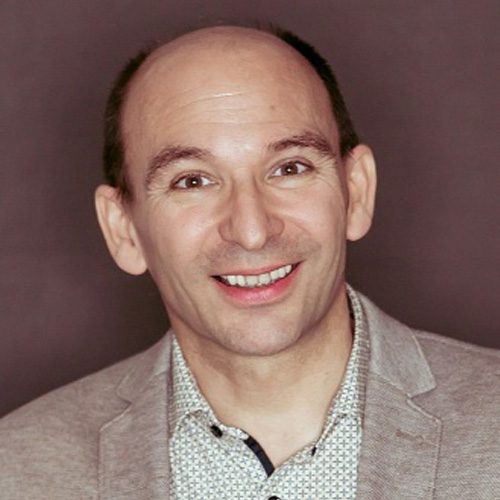
Romana Königsbrun
Romana Königsbrun

Austrian Ambassador to South Africa

Read BIO
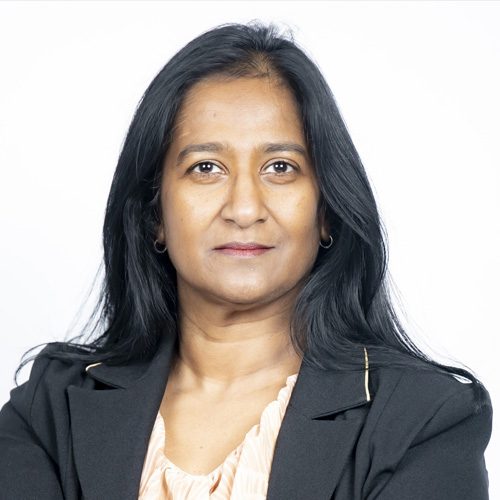
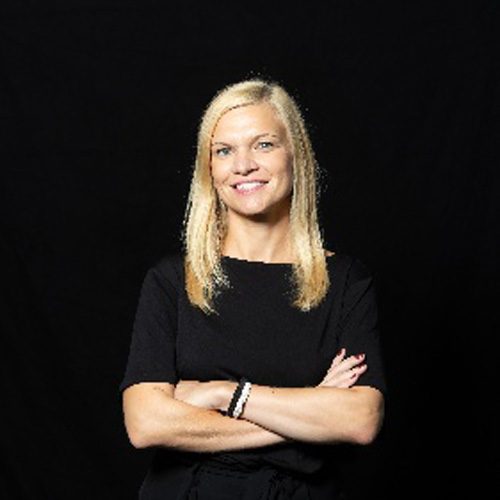
Ruksana Osman
Ruksana Osman

Senior Deputy Vice-Chancellor: Academic at the University of the Witwatersrand
Read BIO
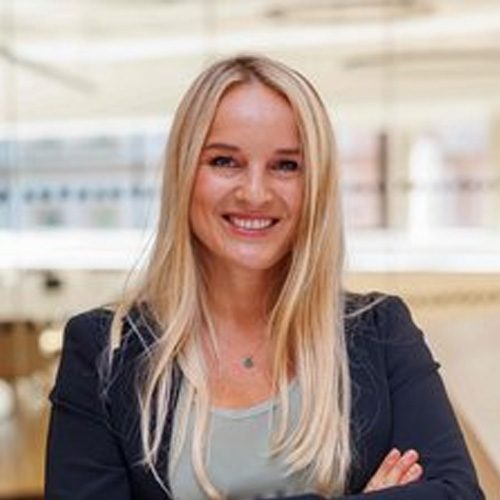
Maximilian Richter
Maximilian Richter

Higher Education Section of the Federal Ministry of Women, Science and Research.
Read BIO
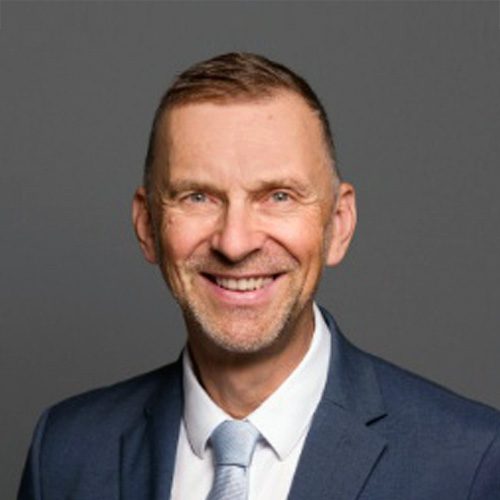
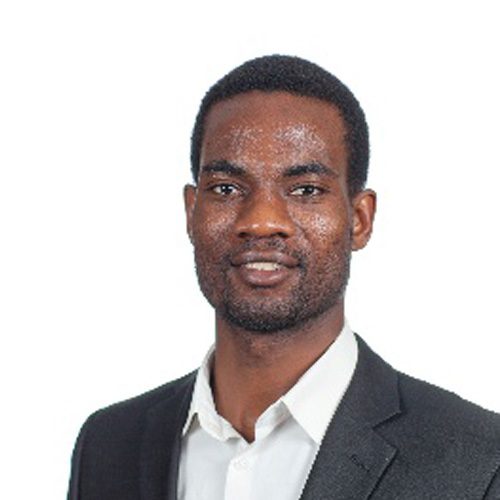
Dominik Reisner
Dominik Reisner

Director at the Austrian Federal Ministry for Women, Science and Research

Read BIO
Vinny Pillay
Vinny Pillay

Chief Director for International Resources at South Africa’s Department of Science, Technology and Innovation (DSTI)

Read BIO
Vanessa Naicker
Vanessa Naicker

Vice President of Social Impact at Anglo American South Africa

Read BIO
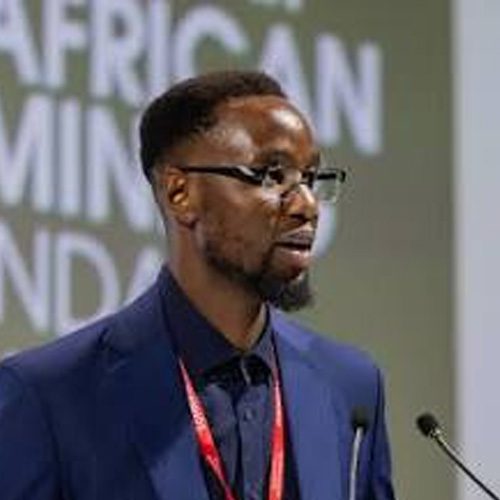
Rodney Genga
Rodney Genga

Associate Professor at the University of the Witwatersrand

Read BIO
Thomas Prohaska
Thomas Prohaska

Chair of General and Analytical Chemistry

Read BIO
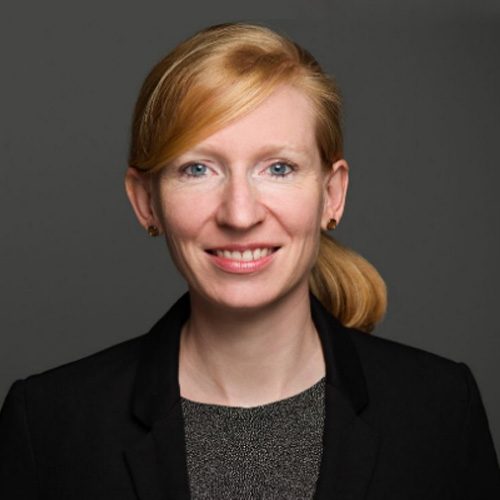
Johanna Irrgeher
Johanna Irrgeher

Chair of General and Analytical Chemistry

Read BIO
Aleksandra Babaryka
Aleksandra Babaryka

Chair of Mining Engineering and Mineral Economics

Read BIO
Clemens Holzer
Clemens Holzer

Department Polymer Engineering and Science

Read BIO
Zlatko Raonic
Zlatko Raonic

Chair of Thermal Processing Technology

Read BIO
Christoph Gatschlhofer

Chair of Thermal Processing Technology

Read BIO
Cornelius Hagenmeier

Head of Internationalisation at Mittweida University of Applied Sciences, Executive Board chair of the EURECA-PRO Alliance, and Research Fellow at the University of the Free State (UFS), South Africa

Read BIO
Susanne Feiel
Susanne Feiel

Director for International Relations and European University at Montanuniversität Leoben and member of the EURECA-PRO Executive Board

Read BIO
Vanessa Massegg
Vanessa Massegg

Alliance Coordinator and Project Lead of EURECA-PRO at Montanuniversität Leoben, Austria

Read BIO
Edgar Tifo
Edgar Tifo

Principal Specialist, Strategic Resource Assessment, Sasol Energy

Read BIO
Sunny Iyuke
Sunny E. Iyuke

School of Chemical and Metallurgical Engineering

Read BIO

Technical University of Leoben

Thomas Prohaska
Univ.-Prof. Dipl.-Ing. Dr.techn. Thomas Prohaska

Chair of General and Analytical Chemistry

Read BIO
Johanna Irrgeher
Assoc Prof. DI Dr. Johanna Irrgeher

Chair of General and Analytical Chemistry

Read BIO
Aleksandra Babaryka
Dr.-Ing. Aleksandra Babaryka

Chair of Mining Engineering and Mineral Economics

Read BIO
Clemens Holzer
Univ.-Prof. Dipl.-Ing. Dr.mont. Clemens Holzer

Department Polymer Engineering and Science

Read BIO
Zlatko Raonic
Dipl.-Ing. Dr.mont. Zlatko Raonic

Chair of Thermal Processing Technology

Read BIO
Christoph Gatschlhofer
Dipl.-Ing. Christoph Gatschlhofer

Chair of Thermal Processing Technology

Read BIO
Scroll to Top
Romana Königsbrun
 

Romana Königsbrun has served as Austrian Ambassador to South Africa and nine other Southern African and Indian Ocean countries since September 2022. A career diplomat who joined the Austrian Foreign Ministry in 1996, she previously held senior diplomatic posts in Nairobi, Jakarta and at the United Nations in Vienna, directed the Austrian Cultural Forum in Istanbul, and served as Director of Human Resources and Deputy Director-General for Administrative Affairs. She studied English and History at the University of Graz and completed postgraduate diplomatic training at the Vienna School of International Studies.

Ruksana Osman
 

Professor Ruksana Osman is the Senior Deputy Vice-Chancellor: Academic at the University of the Witwatersrand. Prior to this appointment, she served as the Deputy Vice-Chancellor for Advancement, Human Resources and Transformation, as the Dean of the Faculty of Humanities, and as the Head of the School of Education. Her experience in higher education spans the full range of roles at all levels of institutional management, governance, and leadership. 
A Professor of Education, Osman has extensive teaching and research experience in the field of teacher education and higher education. She has an established reputation for impactful scholarly work in the broad fields of higher education policy, pedagogy and students’ lived experiences of equity and access to higher education. She is known for the connections she has made between research-centred and research-led approaches to learning and teaching and the transformative practices of learning contexts such as schools and universities.
Professor Osman holds the UNESCO Chair in Teacher Education for Diversity and Development and has established a global network to support the research and development work of the Chair. She is widely published in the academic and popular press, and is the author or co-author of multiple papers, journal articles and books. She is the co-editor of Research-led teacher education: Case studies of possibilities (2012); Large class pedagogy: Interdisciplinary perspectives for quality higher education (2013); Service learning in South Africa (2013); Transforming teaching and learning in higher education: Towards a socially just pedagogy in a global context (2017); Teacher education for diversity: Conversations from the Global South (2018), and Pedagogical Responsiveness in complex contexts (2022) amongst others.
An elected member of the Academy of Sciences of South Africa, Professor Osman is recognised for the quality and relevance of her work in higher education as a teacher and researcher in pursuit of socially just education.

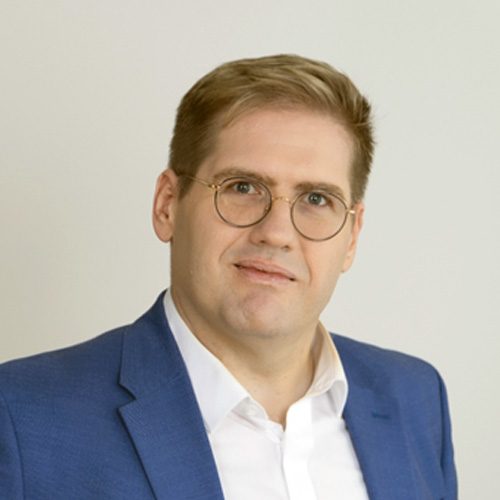
Maximilian Richter
 

Maximilian Richter (born 24 December 1979 in Graz, Austria) is a group leader in the Higher Education Section of the Federal Ministry of Women, Science and Research.
He is responsible for institutional university and higher education governance for all public universities, universities of applied sciences and private universities. After successfully completing his law studies at the University of Graz, Maximilian Richter began his professional career in the Federation of Austrian Industries.

He then moved to the cabinet of the then Federal Minister of Science and Research, Dr. Johannes Hahn, as a specialist consultant. In more than 15 years, Maximilian Richter has been entrusted with various functions at 8 different federal ministers, most recently as Head of Cabinet. Stays abroad of several months each took him to Shanghai and Beijing as part of his professional activities. He is currently also a member of the supervisory board of the Österreichische Mensen Betriebsgesellschaft m.b.H. (ÖMBG). Maximilian Richter is married and the father of 2 children.

As Co-Lead of the Governance Mission at the Building Bridges Symposium, he works to develop a framework for sustained, equitable cooperation between European and African universities, industry and public institutions.

Dominik Reisner
 

Dominik Reisner is a director at the Austrian Federal Ministry for Women, Science and Research, where he has worked since May 2008.

Within the Directorate-General for Higher Education, he is responsible for university governance, performance agreements with universities, higher education reporting, open access, and international networking.
He has also served as a visiting higher education expert at the Austrian Embassy in the United States, taken part in several International Atomic Energy Agency review missions as a national expert, and advised the Government of Kosovo on higher education governance.

Mr. Reisner is committed to strengthening international cooperation and networks in higher education and to building partnerships that advance higher education and research.

Vinny Pillay
 

Vinny Pillay is Chief Director for International Resources at South Africa’s Department of Science, Technology and Innovation (DSTI). 

Vinny represents the Department at the Building Bridges Symposium, contributing a government perspective on international science, technology and innovation cooperation.

Vanessa Naicker
 

Vanessa Naicker is Vice President of Social Impact at Anglo American South Africa, with nearly three decades of experience across engineering, mining operations, talent development and social impact. She leads a portfolio focused on education and skills, support for local government in mining communities, and critical minerals, connecting industrial development with tangible benefits for people and communities.

A registered professional engineer, Vanessa holds a master’s degree in metallurgical engineering and chairs the Minerals Education Trust Fund. Her work brings together industry, government and education partners to strengthen skills, employment opportunities and inclusive economic development. She also served on the B20 South Africa 2025 Industrial Transformation and Innovation Task Force.

Rodney Genga
 

Rodney Genga is an Associate Professor at the University of the Witwatersrand (Wits) in Johannesburg, where he serves as Director of the Academic Development Unit and Assistant Dean for Strategic Projects in the Faculty of Engineering and the Built Environment. He is also a Principal Researcher working in materials science and manufacturing engineering. His research focuses on advanced materials, sustainable manufacturing, additive manufacturing and innovative surface technologies, with applications across sectors including automotive, aerospace and mining.

Beyond his research, Prof. Genga is committed to strengthening engineering education, innovation and research capacity across Africa, and to building international collaborations that support sustainable industrial development.

Thomas Prohaska
 

Thomas Prohaska has been Professor of Analytical Chemistry at Technical University Leoben, Austria, since 2018. He studied chemistry at the Technical University of Vienna and received his doctorate with distinction in 1995. In the same year, he became a research associate at the University of Natural Resources and Life Sciences Vienna, where he was responsible for establishing a laboratory for elemental and isotope analysis. From 1998 to 2000, he was a researcher at the European Commission’s Joint Research Centre, IRMM, in Geel, Belgium, where he acquired a strong background in metrology. Upon returning to Vienna, he established a research laboratory for isotope research based on MC-ICP-MS after receiving a €1.2 million research grant through the START Award. He remained an associate professor at BOKU until 2018, when he was appointed Full Professor at Technical University Leoben. Since 2023, he has served as Vice-Rector for Education, International Affairs and Digitalisation and as Head of the Chair of General and Analytical Chemistry. His research focuses on elemental and isotopic analysis using mass spectrometry, chemical imaging and metrology, and he has published more than 170 peer-reviewed papers. 

This year, he celebrates the 30th anniversary of his journey in isotope-ratio research—three decades of pioneering innovation and dedication that have shaped the field and inspired generations of scientists.

Johanna Irrgeher
 

Johanna Irrgeher is an Austrian analytical chemist with nearly two decades of experience in environmental and isotope research and an Associate Professor at Technical University Leoben, where she has headed the Research Group on Isotope Analysis since 2019. With a background in food science and biotechnology from BOKU Vienna, where she earned her PhD with honours in 2013, Johanna has built an international career spanning academia and applied research, including positions at NRC Canada, National Cheng Kung University in Taiwan and the Helmholtz Centre Geesthacht in Germany. 

Her research focuses on developing methods for elemental and isotope-ratio mass spectrometry across various fields of application. Her expertise includes sampling, sample preparation, method development for trace-element and isotope analysis, measurement, data reduction, statistical data analysis and uncertainty propagation. She has experience in handling large datasets, conducting elemental analyses using ICP-QMS, ICP-SFMS and ICP-MS/MS, and applying isotope-analysis methods to B, S, Sr, Mo, Zn, Ti, Gd, Pb, Nd and U isotopes using MC-ICP-MS, with expertise also extending to chemical imaging using LA-ICP-MS and coupled techniques such as prepFAST-MC and seaFAST. She has received several awards, including the Agilent European Rising Star Award in 2017, the Fritz Feigl Prize from the Austrian Society of Analytical Chemistry in 2018 and the Fresenius Lectureship Award from the German Chemical Society for 2024–2026, recognising her international contributions to analytical chemistry. Johanna has been involved in various transdisciplinary research projects and has supervised more than 50 students at all academic levels. 

She currently chairs the IUPAC Commission on Isotopic Abundances and Atomic Weights (ciaaw.org), making her the first woman to hold this position in the commission’s history since its establishment in 1899.

Aleksandra Babaryka
 

Aleksandra Babaryka is a Senior Scientist at the Chair of Mining Engineering and Mineral Economics, Technical University Leoben, Austria. Her expertise is in mining subsidence and mining-induced damage prediction and modelling, with particular emphasis on the safe design and operation of cavern energy storage systems. In her doctoral thesis, she developed a universal empirical approach capable of capturing asymmetrical and non-Gaussian subsidence, enabling better subsidence prediction in regions with special tectonic conditions. This work significantly advances the understanding of complex surface deformation patterns and contributes to safer, more sustainable underground mining operations.

Dr. Babaryka is actively involved in international research projects addressing underground gas storage, geotechnical challenges of the energy transition, and responsible resource development. Her current research focuses on the integration of inverse modelling, machine learning, and White-Box approaches to extract deeper insights from available data in the area of hyperspectral imaging, mining process optimisation, and comprehensive data-based risk analysis.

Clemens Holzer
 

Clemens Holzer is Professor and Head of the Chair of Polymer Processing and Head of the Department of Polymer Engineering and Science at Technical University Leoben, Austria. He studied Polymer Engineering at Montanuniversität Leoben, completing his diploma in 1991 and his doctorate in 1996. After several years in industry in Switzerland, where he worked in research and development and later held management positions in production and R&D, he spent six years as Deputy Head of Institute and Professor at the University of Applied Sciences Northwestern Switzerland. In 2008, he returned to Leoben as Full Professor of Polymer Processing and Head of the Institute of Polymer Processing. 

His main research areas include injection moulding, extrusion, recycling and additive manufacturing, with additional expertise in material data, process simulation and the resource-efficient processing of polymers. His work places particular emphasis on sustainable production processes, recycling and circular approaches in polymer engineering. He also serves as Programme Director for the Bachelor’s and Master’s programmes in Circular Engineering.

Zlatko Raonic
 

Zlatko Raonic is a Senior Scientist at the Chair of Thermal Processing Technology at Technical University Leoben and Group Leader for Computational Engineering. His research focuses on computational fluid dynamics, reactive and multiphase flows, fluid-structure interaction, thermochemical modelling and the development of advanced computational methods for industrial process optimisation. He completed his doctorate at Technical University Leoben in 2023, developing computational models for metal-recycling processes using FastCalc and OpenFOAM-based CFD, with particular emphasis on multiphase systems, turbulent combustion and structural mechanics. His current research activities also include the recovery of valuable materials from metallurgical residues, lithium-ion battery recycling and thermochemical phosphorus recovery, combining numerical modelling with sustainable thermal and recycling technologies. 

Christoph Gatschlhofer
 

Christoph Gatschlhofer is a researcher at the Chair of Thermal Processing Technology at Montanuniversität Leoben. His research focuses on the thermochemical treatment and valorisation of secondary raw materials, particularly phosphorus recovery and the recovery of valuable metals from metallurgical residues. His Master’s thesis, completed at Technical University in 2022, investigated phosphorus behaviour during the carbothermal reduction of iron-, chromium- and manganese-rich slags, with particular emphasis on metal recovery, slag treatment and circular-economy applications. His current research activities include carbothermal reduction, metal recovery from metallurgical residues and thermochemical phosphorus recovery from sewage-sludge-derived materials. He is also a member of the Technical University Leoben research team working on the PHOBOS project, which aims to recover phosphorus from sewage-sludge ash and sewage-sludge char while producing mineral and iron-rich fractions for further industrial use, including binder applications in the construction-materials industry. 

Cornelius Hagenmeier
 

Cornelius Hagenmeier is Head of Internationalisation at Mittweida University of Applied Sciences, Executive Board chair of the EURECA-PRO Alliance, and Research Fellow at the University of the Free State (UFS), South Africa. A qualified legal academic in Germany and South Africa, he previously directed UFS’s Office for International Affairs. He serves on the Board of the African Centre for Higher Education Internationalisation and has extensive experience in global partnerships, policy development, and capacity-building in higher education. 

Susanne Feiel
 

Susanne Feiel is Director for International Relations and European University at Montanuniversität Leoben and a member of the EURECA-PRO Executive Board. She works at the intersection of higher education, research, industry and public policy, developing strategic partnerships and building the structures that sustain international cooperation. Her experience spans organisational development, university alliance governance and major international initiatives, including co-founding EURECA-PRO, launching Focus India—now a joint TU Austria initiative—and leading Leoben’s Resources Innovation Center for five years. Through this strategic expansion, she has grown Leoben’s international department from a one-person initiative into a team of 30. She holds a PhD from TU Bergakademie Freiberg.

As Co-Lead of the Governance Mission at the Building Bridges Symposium, she works to develop a framework for sustained, equitable cooperation between European and African universities, industry and public institutions.

Vanessa Massegg
 

Vanessa Massegg is the Alliance Coordinator and Project Lead of EURECA-PRO at Montanuniversität Leoben, Austria, coordinating cooperation across nine European universities and leading the alliance’s project management. Working closely with its governing bodies and partner teams, she oversees planning and implementation, aligning activities with shared objectives. 

She brings extensive experience in international cooperation and project and programme management, having previously worked at the International Atomic Energy Agency (IAEA), the Austrian Ministry of Foreign Affairs and the United Nations Industrial Development Organization (UNIDO). She holds a Master of Advanced International Studies from the Diplomatic Academy of Vienna and an MA in Human Rights and Refugee Studies from City University London. 

Edgar Tifo
 

Edgar Tifo is a professional engineer with more than 18 years of experience in engineering and technology commercialisation across South Africa, the USA, South Korea, Uzbekistan and Italy. At Sasol Energy he assesses the financial, talent, technology, funding and partnership resources behind the company’s strategic choices. He previously led low-carbon project development there, covering green hydrogen, bio-based fuels and their derivatives, and explored partnerships with GIZ, IFC, KfW and IDC. His earlier roles include managing engineering at NTP Radioisotopes and working on multi-billion-dollar gas-to-liquids and methanol-to-olefins projects in Uzbekistan. He holds a Master’s in Technology and Innovation Management from the University of Pretoria and a BSc in Chemical Engineering from the University of the Witwatersrand. 

Sunny E. Iyuke
 

Professor Sunny Iyuke joined the School of Chemical and Metallurgical Engineering as a Senior Lecturer in 2005 and rose to the rank of Full Professor in 2010. He served as the Executive Officer & Principal of the Petroleum Training Institute (PTI), Warri, Nigerian from July 2016 – July 2020, Head of School of Chemical, and Metallurgical Engineering at Wits from 2009 – 2014. He obtained his BSc (Hons), MSc in Chemical Engineering and PhD in Chemical and Process Engineering in 1987, 1994 and 1999, respectively. He has published more than 322 articles in journals and conferences worldwide, and produced numerous patents in nanotechnology and proton exchange membrane (PEM) fuel cell locally and internationally. Has supervised more than 36 PhDs, 53 MSc and numerous undergraduate students to completion, while currently supervising 5 PhDs postgraduate and 6 undergraduate students.
He is rated on google scholar with 41 h-Index, i10-index 100 and 5892 citations. He is an Editorial Board member for the African Journal of Engineering and Environment Research (AJOEER) and SciTechnol. He presently conducts research on Carbon nanotechnology with applications in PEM fuel cell and green hydrogen production, water treatment and enhanced oil and gas processes.

He is a chartered Engineer with the Engineering Council of UK, Professional Engineer (PrEng) with the Engineering Council of South Africa, Registered Engineer with the Council for the Regulation of Engineering in Nigeria (COREN), a Fellow of South African Academy of Engineering and a Fellow of the Nigerian Society of Chemical Engineers.